Michigan Woman
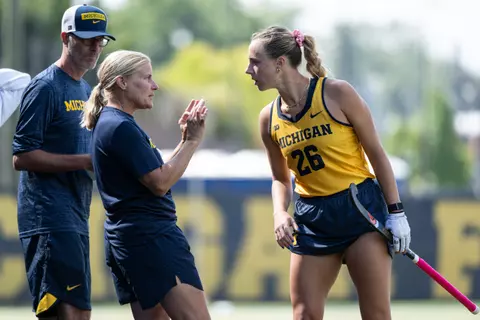
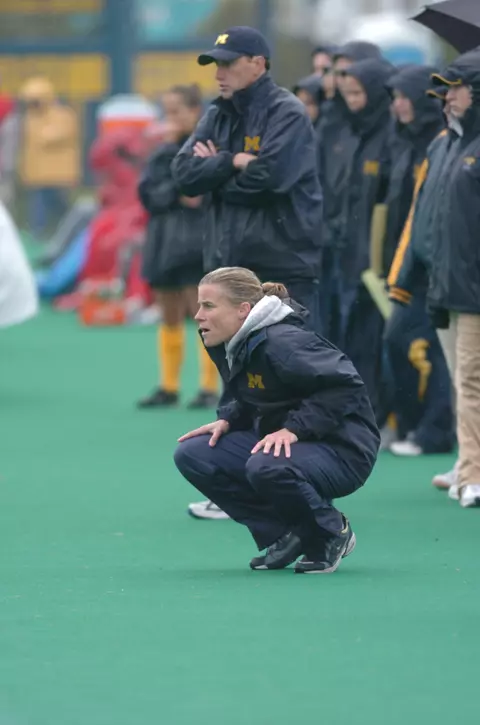
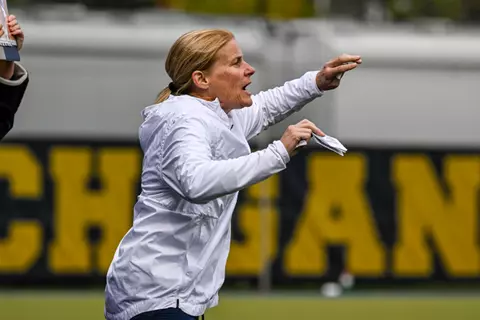
Legendary U-M Coach Marcia Pankratz Retires
Leah Howard

“It has been a tremendous honor and a joy of a lifetime.”

The Early Days
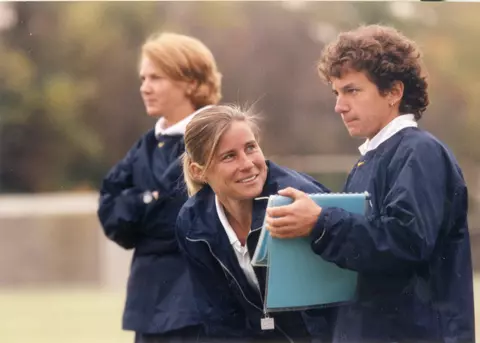
Marcia Pankratz grew up in a neighborhood of 15 boys in Boston, Mass., where she played sports outside all day, every day. She didn't know any different. It wasn't until she got to high school that she realized there weren't a lot of organized opportunities for the girls. In fact, there were just two sports offered: cross country and field hockey. She picked the latter because it more closely resembled her favorite sport of ice hockey.
It was field hockey that took her to the University of Iowa in the fall of 1982. She was a part of some great teams for the Hawkeyes, scored 76 goals over her four years, contributed to three Big Ten titles and twice earned All-America first-team honors. Just as meaningful, she commends the university for how it treated its female athletes in the early years of Title IX and credits the coaching and the support that she received there for helping her make the leap to the Olympic level.

Pankratz graduated from Iowa with a degree in mathematical science and visions of becoming a successful stockbroker. But she was the product of two teachers, and over nine years of playing with the U.S. Women's National Team, she found her passion was more in line with that career track. The question at hand: would she teach math or teach field hockey? She felt more of an expert in field hockey, and really -- at the end of the day, no matter the subject -- she'd be helping young people and teaching them to be great women.
North Carolina provided her first opportunity as an assistant, then, in 1996, came Michigan and its head coach position. She concluded her competitive career the same year at the Atlanta Olympics, packed up and headed to Ann Arbor. There she would make history.
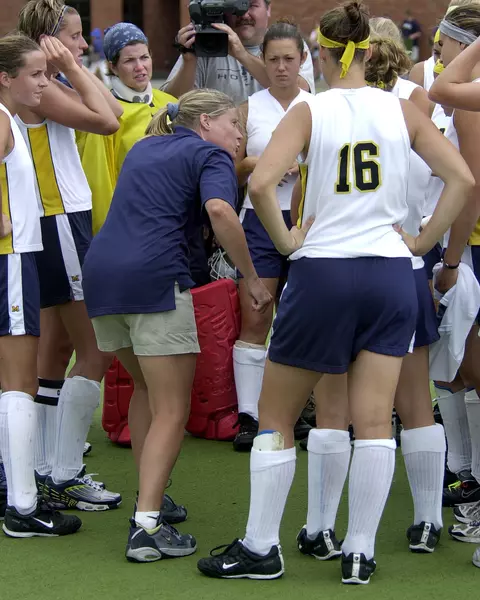
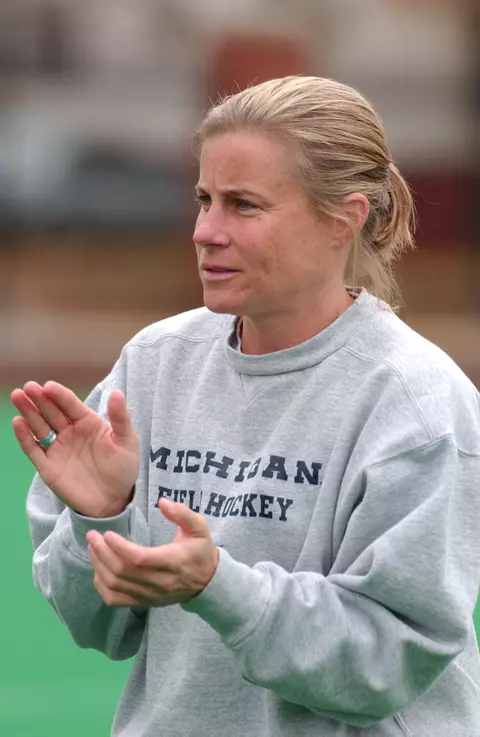
Pankratz's service to Michigan field hockey came in two stints. She served as head coach for nine seasons from 1996-2004 and returned in 2009 for an additional 16 seasons.
By the Numbers
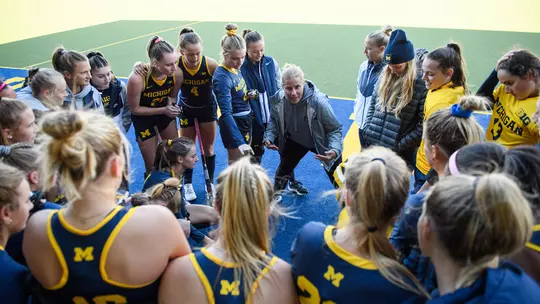
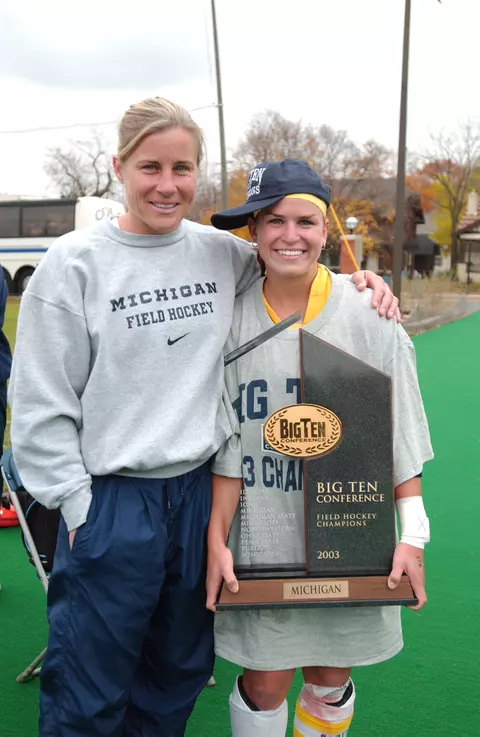
Among the winningest coaches in NCAA field hockey history, Pankratz guided the Wolverines to an NCAA championship, 10 Big Ten regular-season titles and eight tournament titles over her tenure and solidified Michigan among the top programs in the country. Michigan field hockey became the first women's program in the history of Michigan athletics to capture an NCAA championship when it defeated Maryland 2-0 to claim the 2001 title.
• 371-162 overall record
• 12th all-time in Division I in both total wins and win percentage (.696)
• 132-55 Big Ten record
• 2001 NCAA champions -- first by a women's program at the University of Michigan
• 10 Big Ten regular-season titles
• 8 Big Ten Tournament titles
• 18 NCAA Championship appearances
• 6x Big Ten Coach of the Year
• 48 All-Americans (from 32 different players) -- including 18 first-team nods
• 6 Big Ten Players of the Year
• 8 Big Ten Offensive Players of the Year
• 6 Big Ten Defensive Players of the Year
• 1 Olympian
As an athlete, Pankratz also spent nine years and played in 110 international matches with U.S. Field Hockey (1985-90, '94-96). She was inducted into the United States Field Hockey Association Hall of Fame in 2004.
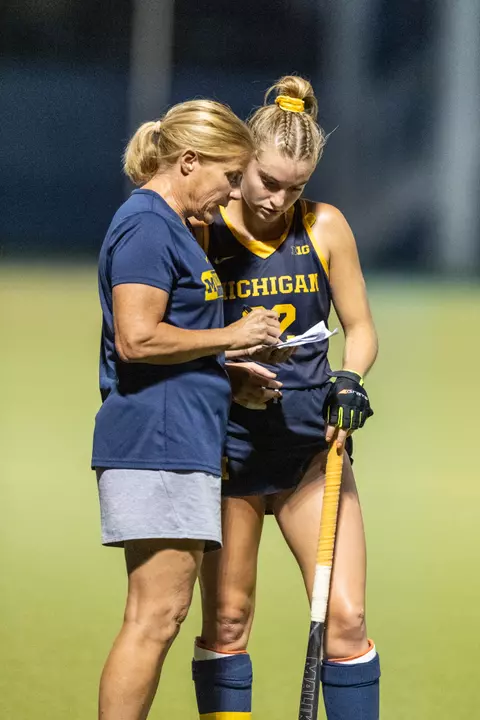

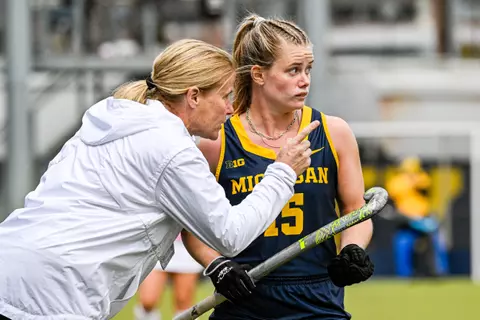

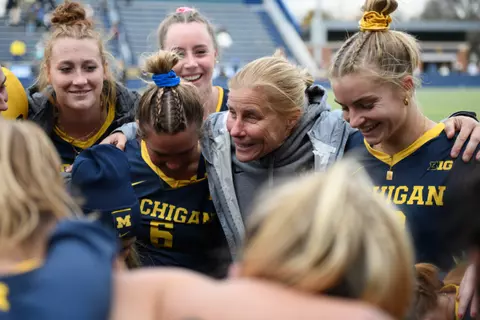
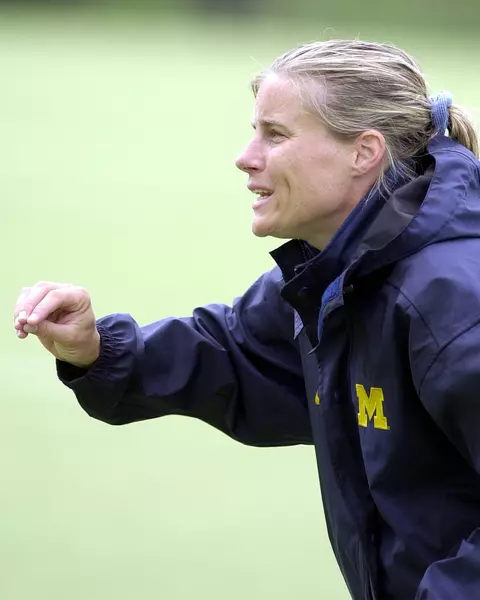
I don't think coaching a sport is really about the X's and O's of that sport. It's about teaching, and it's about creating relationships and mentoring young people. We always talk here at Michigan about coming here as an 18-year-old girl and leaving a 22-year-old woman ready to take on the world and be successful in life. That's really what we're doing.Marcia Pankratz
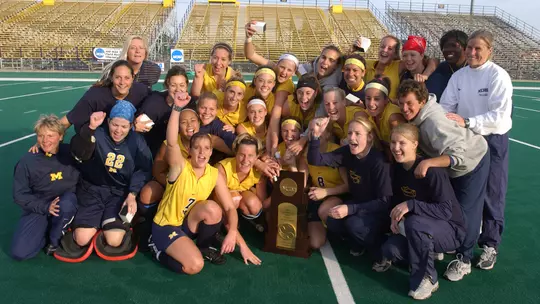
2001 National Champs!
On Sunday, Nov. 18, Michigan defeated top-ranked Maryland, 2-0, at Kent State's Dix Stadium to claim the university's first women's team national championship. With the win, Michigan became the second team from the Midwest to capture the NCAA title, joining 1986 champion Iowa, and avenged a 2-1 loss to the Terrapins in the 1999 NCAA championship game.
After getting knocked out of the Big Ten Tournament early, U-M entered the NCAA Tournament with the No. 7 ranking and did not lose again. Michigan defeated North Carolina (5-2) and rival Michigan State (2-1 OT) to earn a trip to the Final Four in Kent, Ohio. In the NCAA semifinals, the Wolverines scored four times in the second half to overcome an early deficit to Princeton (4-2), and, two days later, held up against a Maryland barrage of second-half shots and corners to upset the perennial power in the NCAA Championship rematch.
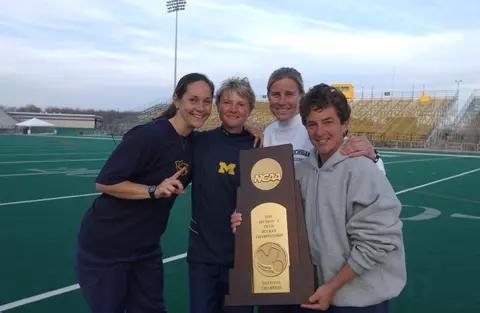

1999 NCAA Championship Runner-up
Michigan made its first-ever NCAA Tournament appearance count, advancing to the championship final before narrowly falling to Maryland, 2-1. U-M claimed 20 wins for the first time in program history -- six of which came amidst its remarkable playoff run.
Entering the Big Ten Tournament with the third seed, Michigan knocked off a pair of top-four opponents en route to the tournament crown, using double overtime to beat No. 4 Penn State, 3-2, in the semifinals before defeating No. 3 Iowa, 2-1, in the final for the program's first tournament hardware. In the NCAA first/second rounds, U-M scored in the final four minutes to beat Duke, 2-1, and eliminated regional host Wake Forest, 3-2, on a double-overtime penalty stroke to earn a trip to the Final Four in Boston, Mass. Michigan snapped UConn's 23-game-winning streak in the semifinals and, after falling behind early against the Terps in the championship game, pulled within one goal early in the second half but could not score again.
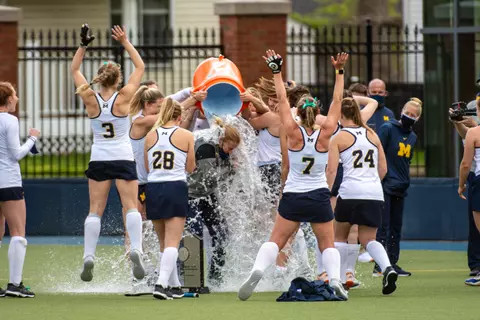
Spring 2021 NCAA Championship Runner-up
After having its 2020 season postponed in the fall due to the COVID-19 pandemic without any future certainty and enduring three weeks of preseason pauses in January and February, Michigan posted a stellar 15-3 record in the unprecedented spring season, swept the Big Ten regular-season and tournament titles and advanced to the NCAA championship game for the third time in program history -- and first since winning in 2001.
Michigan earned a dramatic 2-1 shootout victory against No. 3 Louisville in the semifinals, netting the clinching goal in the sixth round. In the national final against North Carolina, U-M scored first and then rallied from a two-goal deficit to force overtime before dropping a 4-3 heartbreaker to the two-time defending champion.