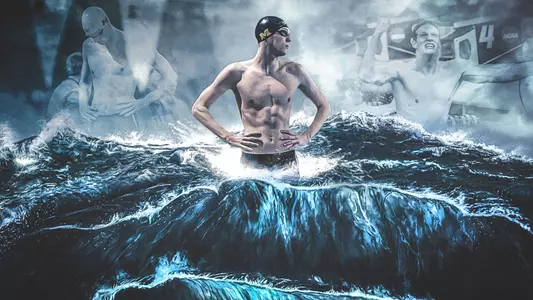
Four Days in Austin: Felix Auböck's Tumultuous Path to a National Title
4/18/2019 10:00:00 AM | Men's Swimming & Diving, Features
On March 30 at the NCAA Men's Swimming and Diving Championships in Austin, Texas, University of Michigan junior Felix Auböck won the national title in the 1,650-yard freestyle after back-to-back runner-up finishes in the two years prior. To get to the top, he first had to experience three days of disappointment, the crux stemming from a stunning fall in the 500-yard freestyle -- an event in which he was the top seed after being national runner-up the year before. The following is his account of those four days: what went wrong, the up-and-down emotional rollercoaster he felt, and how he turned it all around.
By Felix Auböck
The week before the NCAA Championships, I was really confident that I'd swim fast when it counted.
In practice, we do these standardized sets before our big meets. You shouldn't compare your times to your previous years, but you do. That week, I was faster on all of those sets than I ever was before.
Last year, I was definitely not where I wanted to be. The weeks between Big Tens and NCAAs were rough. I took second in two races, and it was in the worst condition I've ever been in. Honestly, I was lucky.
I wanted to win those events. Who doesn't? You don't swim or compete in any sport to be second. My first year, when I was runner-up in the mile and the American record was broken in my heat, I felt like a winner. Nobody expected that from me.
But it was different last year. I didn't win. I felt like I lost -- twice.
Going into this year, I told myself it was going to be different. I really wanted to win one, not just for myself, but for my team. Every swimmer dreams of being at the top of the podium and getting a medal placed around your neck.
Wednesday | 800-yard Freestyle Relay
Opening NCAAs, I swam anchor on the 800-yard freestyle relay. I didn't feel at my best, but I knew from past experience that you don't have to feel your best to swim fast. That being said, I was upset with how I swam. A 1:32.7, that's the slowest I've ever gone on that relay.
 Dr. Josh White, U-M associate head coach: Felix's relay split wasn't as fast as we would've liked it to be, but it also wasn't dramatically out of range. He had trained better than ever since mid-December. I still expected that he'd swim well in the 500. I really wasn't worried about it.
It made me think, 'Why was my time so slow?' Josh [White, distance coach] told me not to worry about it. We were in lane one and next to Texas (which won). By the time I got in, the race was practically over.
Ask anyone: that swim is one that you'll feel the next morning. You swim 200 yards in the most rested condition you're in and go all out. It's going to hurt. Still, I managed it like any other race from a treatment standpoint.
Thursday | 500-yard Freestyle
All things considered, I felt fine going into Thursday. However, I think the relay affected me. I didn't want to let it happen, but it's hard to cut that out. My relay split wasn't bad, but it doesn't explain how I went 4:18 in the 500 when my best time is a 4:09. Nine seconds may not seem like a lot, but in the swimming world, when literally one one-hundredth can be the difference, it's a big deal.
It was probably the worst race of my life. I had a bad race at the Olympics, but it's a little easier to understand there. It's the Olympics! But during a prelims session at NCAAs? Should never have happened.
Looking back, the only thing that makes sense to me was that I was too tight. The field was so competitive, and making that final is always tough, but I just wasn't relaxed enough. I was so nervous that I wouldn't make it that my aerobic system never got going. My muscles tensed up and got tired way too early. I got stuck in one pace and couldn't get out of it.
Getting out of the pool and walking back to the bench, I was completely embarrassed. Swimming the way I did and not making the final as a top seed makes you look a little ridiculous.
To get to our bench, you have to go through other teams. I could see their faces. They're standing there thinking, 'What's going on? Why is he so slow?' You try to avoid that, but you notice it. It felt unreal, like a bad dream that you couldn't believe was happening.
The first thing Josh told me was, 'Go and warm down.' I was thinking, 'Really? That's all you have to say?' But it just shows how much he cares. He knows the meet is still going on. There were other races to swim. He never stopped believing in me because he knew no matter what, I have to warm down to be competitive.
I don't think I got over that race until after the final that night. Watching eight other guys swim, knowing I should be -- and could be -- out there, that was painful. That was the first session I went to where I didn't want to watch -- but I needed to. After it's done, it's over. The opportunity is gone.
Friday | 200-yard Freestyle
On Friday, I had the 200-yard freestyle. I talked about it with Miles [Smachlo] and said, 'You know what, Miles? I'm going for this A final. This is how we bounce back! THIS is how we score points!' I was ready to go.
I warmed up with my meet suit five minutes before the race to get that tightness and nervousness out of the way, but the result was the same as the previous day. I went slower than I ever did. At that point, I thought, 'OK, I guess that's what it is.' I still questioned why I went 1:35. It didn't make sense.
At that point, I wondered if I was getting sick. I felt fine physically, but it was a plausible explanation. One thing that never crossed my mind was quitting. Michigan Men don't quit.
I would've felt like a loser if I didn't race. I would've regretted it the rest of my life. Skip one race just because I was swimming slow? No. Not at NCAAs.
The only event I had left was the mile, which is a totally different race than the 200 or 500. The coaches knew I was capable of having a great mile. They saw that I had it in training.
That afternoon, Josh and I did a set before finals, but it wasn't a loosen or warm-up. It was six 100s on 1:05, thinking it would be good for me to flush the first two days out of my system. But really, I think he tricked me. Do this and see how fast you are. I started to get my confidence back.
When I went to bed that night, I thought, 'I might be crazy, but I think I can win this.' You need to be able to dream about it if you really want to win it. There's no way you go into a race like the mile and just see what happens. You won't win.
I started thinking about all those crazy sports stories. The hero with such high hopes hits adversity at the beginning and gets humbled but regroups to succeed at the end. After that Friday practice, my mindset changed to 'Why not?'
I had nothing to lose. Nobody expected anything from me.
Saturday | 1,650-yard Freestyle
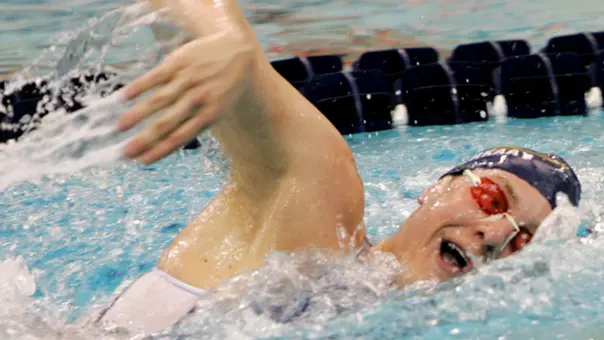
Before the warm-up, I had obviously seen what all the heats before our last one did. At that time of day in the competition pool, nobody really warms up besides the eight guys in the final. I could see the coaches of the other swimmers in the heat. They're looking around going, 'How is he looking? What's going on with this guy?' They probably expected it would look hard for me, but I was doing 51s easy. You could see the confusion in their faces. I felt really good, and because of that, I forgot what happened in the three days prior.
When it came time for the race itself, I started out easy, but some of the other guys didn't. They went out so fast, I was like, 'Damn it!' I was a complete panic. I thought they'd keep doing that. I also knew I couldn't get drawn in to go with them. Josh always says not to be surprised if someone takes it out fast. At the 300-yard mark, when I caught up to them, I felt so great. No pain.
I flipped into first around the 500-yard mark. I know I shouldn't look, but I do. Two hundred yards later, I knew I was feeling way better and had way less pain than I did my freshman year. That year, I remember asking myself, 'When is this over?' But here, around lap 30, my confidence was flowing. I could increase my tempo and finish it.
In a race like that, there's nothing more satisfying than seeing the second or third guy fall back one or two tenths every 50 yards. They tried to stay with me, but I was able to hold my pace. With 500 yards to go, that's when it started to hurt.
I started counting every lap. When you break 300 and there's 250 yards left, it still hurts like hell, but you ignore it.
'Come on, Felix! There's 250 yards to go and you can win this!'
When I touched, I had to look at the scoreboard first to make sure I had actually won. In all honesty, going from the 500 to that in two days, it was better than anyone would've expected. I was going to be happy no matter what.
Then I looked at the guys, saw they were going crazy and just lost it. I try not to be emotional in real life, but when I do something like that, I can't control my body. It was so satisfying. Adrenaline was rushing through me, I couldn't believe what happened.
Standing at the top of the podium was pretty surreal. The two years before, I was one spot lower looking up at someone else. In those years, the edges to the trophy were silver. This one was gold.
I walked back to the bench with tears in my eyes. That same walk two days ago was so hard. Now I have coaches that I don't even know who are stopping to congratulate me.
Looking back, I would say it was a bad meet with the best outcome I've ever had. I had a rough week, the lowest amounts of points I've ever scored for the team. If I had gone faster on the relay, we could've moved up spots in the standings. I didn't score in the 500 and didn't score in the 200. I lost points for my team.
Honestly, I don't know what went wrong and still don't. I want to know because I don't want it to happen again. But it also taught me a valuable lesson.
Your meet isn't really over until the last day. What happened in past races doesn't mean the future races will go the same way.
Swimming is just swimming -- and each race is a new race.