Alumni Spotlight: Bill Fraumann
6/10/2015 12:00:00 AM | Men's Basketball
June 10, 2015

Bill Fraumann
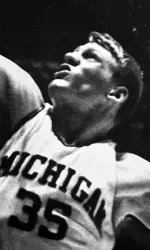
Willard "Bill" Fraumann ('70) spent four of his college years playing for the Michigan basketball team alongside program great Rudy Tomjanovich, but basketball wasn't the sport Fraumann would ultimately leave a lasting impression on. After graduating from Michigan with a degree in pre-legal studies, Fraumann went on to study law at Harvard, where he fell in love with rugby. While also serving in the U.S. Navy, he played for the USA Eagles in their first international match and went on to score the first tries in modern USA rugby history against France in 1977. He also became the first active serviceman to play for the Eagles. In 2000, Fraumann was named to the USA All-Time team and was elected to the USA Rugby Hall of Fame class of 2015. Fraumann's family ties to his alma mater, spanning generations on both sides, have kept him involved at the University of Michigan. He has served on the Political Science Advisory board, the University of Michigan Institute for the Humanities, Board of Visitors and the LS&A Visiting Committee of the University of Michigan. Fraumann's three children each attended Michigan, where his son, Bob, played football and his daughter, Ellen, captained the swim team. He hopes that his five grandsons will follow in the family legacy.
Q. What has your life been like after your years at Michigan?
A. I met Anne (Derleth) at Michigan my junior year and we got married in 1971 while I was at Harvard. After law school, I went into the Navy for three years and then joined Kirkland & Ellis in Chicago. I retired as a senior partner of Kirkland several years ago.
Q. What were your experiences at Michigan, both athletically and academically?
A. I grew up in Ann Arbor and graduated from Ann Arbor High School in 1966, which was the year Cazzie graduated. Fortunately, I got to play with Rudy Tomjanovich for four years. Our four years were the years between the two Russell's -- Cazzie and Campy -- and we did not quite match the success of the two Russell eras. Academically, I was a math major until my junior year and then switched to pre-legal studies. It was always hard to balance the academics with the athletics, then and now.
Q. What do you remember from your Michigan basketball years?
A. Watching Rudy set scoring and rebounding records, some of which still stand. He was awesome. It was a much different game than it is today. Freshmen weren't eligible. There was no three-point shot, no 35-second clock and no dunking. Yet, we averaged 85 points a game. I think the game was more fun to play than today's game, however, you couldn't touch anyone on defense. (There are) much, much tougher defenses today. It is much more sophisticated all the way around. Players did not leave early, so you formed great friendships over the four years with the classes ahead and behind you.
Q. What was it like to play alongside some of the Michigan basketball greats?
A. Rudy (Tomjanovich) was an All-American in every way. He was a great scorer and rebounder even with all of the defenses completely focused on him. Dan (Fife) was tough -- very tough. He never let up. I also played with some other excellent players in Jim Pitts, Kenny Maxey, Dave McClellan, Dennis Stewart, Bob Sullivan, Willie Edwards, Rick Bloodworth, Mark Henry, Rod Ford, Bird Carter, Harry Hayward, etc. We had some players who were great characters like Tim Nicksic and Steve Fishman.
Q. What was it like transitioning from Yost to Crisler?
A. Yost was a great place to play. We played our freshman games there. It had a great floor. The fans were right on top of you. The ghosts of Cazzie (Russell) were everywhere. We inaugurated Crisler my sophomore year when it opened. It was a great place, but a lot quieter. It had nice plush seats and a more reserved crowd. It was a great move by Michigan to bring the students down close to the floor.
Q. What was Coach Johnny Orr like?
A. I caught him early in his career. Dave Strack left after my sophomore year and Orr took over. They had very different styles. Johnny really liked to see the ball go up and down the court. He and Bill Frieder made a great combination in the mid 70s.
Q. Do you still follow the basketball program today?
A. Yes. I really like what Coach (John) Beilein has been doing. I got to know him early on and have been really pleased to see that he has stuck with his coaching philosophy and seen it work.
Q. How do you feel about your upcoming induction into the U.S. Rugby Hall of Fame?
A. It is a great honor to be recognized. A lot of great athletes have played rugby for the United States.
Q. You were originally a basketball player. How did you get into rugby while at Law School?
A. I used to see the U-M Rugby Club playing on the way to football games. They played where Elbel Field is now. It looked like fun, but not exactly something Coach (Johnny) Orr wanted us to get involved with. I started playing rugby while at law school with some friends. Harvard had a very good side, and I learned quickly.
Q. What do you remember most about playing rugby for the U.S?
A. The tries I scored against France in the Eagles second International game. They were the first "touchdowns" scored for the U.S. in modern times and to have them against France, which was then one of the best teams in international rugby, made it very special. Another would be playing against England on their home field at Twickenham Stadium. It was just unbelievable experience for a rugby player. It is the holy ground of rugby.
Q. How does it feel to be considered a pioneer for rugby in the United States?
A. That makes me sound old! When the U.S. Eagles first started playing internationally in the mid 70s, the players were unpaid amateurs and we only played a few games a year. Now the game is professional and played almost year around.
Q. Tell us about your Michigan family legacy.
A. The whole family -- on both sides are Michigan grads -- going back a couple of generations. My son, Bob, played football at Michigan. Both of Bob's grandfathers played football for Michigan in the 40s. Bob's older sister, Ellen, captained the U-M swim team in 1998. His younger sister Sarah went to U-M Medical School with Bob. Now, we have five grandsons and I hope they all go to Michigan!
The Office of Alumni Engagement strives to foster a community, recognize the holistic student-athlete and honor the great Michigan Athletics history. This alumni spotlight illustrates the impact that our alumni are having around the world and how they stay engaged with Michigan.