Fueling Resources Making a Difference in Water Polo Training
1/11/2018 3:59:00 PM | Water Polo, Features
ANN ARBOR, Mich. -- When Dr. Marcelo Leonardi arrived as the University of Michigan water polo head coach in 2014, he recognized a need to improve the nutrition within his program. He also saw an opportunity with it being the first year the NCAA deregulated how much food schools could provide to student-athletes.
"Once a month we try to implement education, picking a theme we feel our team is struggling with or needs to address," said Leonardi. "With fueling stations, assessments, monitoring and education I feel like our nutrition has improved significantly. We aren't telling them what to eat. We are educating them with information and data to hopefully change habits that end up affecting performance and results."
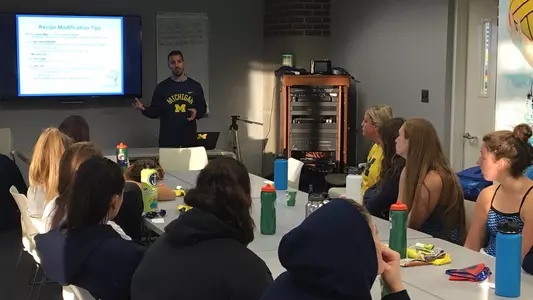
Michigan water polo has always had access to a performance dietitian and with additions to the staff they have been able to increase the educational opportunities for the team. Last year, it was Zach Bennett who talked to the team about what to eat and when to eat it along with providing some other general nutrition knowledge in his "Bennett's Corner" sessions. This year, the performance nutrition staff is gearing the talks more specifically to team needs. Grant Harris is now leading the sessions titled "Grant's Garage."
"The team had a great foundation," said Harris. "This year, we have really tried to focus on sport-specific nutrition. We have a lot of great general-nutrition information for all sports, but we like to gear it to the strength, power and endurance they need to get the championships they want in the pool."
Harris met with each individual on the team to talk about what their needs were. Some of the needs came from how the team felt during workouts and others came from assessments Harris put the team through.
Similar to past seasons, the team measured body composition (fat and fat-free mass) using bod pods, but added a new test this year, putting the team through USG (urine specific gravity) hydration testing. The hydration testing lets them know if they need to add more fluids or add electrolytes during competition to maintain their fluids.
"They are a competitive bunch," said Harris. "We ranked the hydration test results from well-hydrated to dehydrated and they liked it. It is a competitive drive for them wanting to be at the top no matter what it is."
Senior captain Christina O'Beck mentioned the team is having some fun with the results saying, "We are texting each other in our GroupMe to see who is drinking water."
The team will do hydration testing two days before every weekend tournament to make sure they are keeping the right amount of fluids in their system.
Along with the monthly talks, Harris and the rest of the performance-nutrition staff under director of performance nutrition, Caroline Mandel, ensure student-athletes have all the tools readily available to keep them properly fueled for optimal performance.
"It is amazing the resources that are being provided for eating," said Leonardi. "We have Fueling Blue, which is fantastic and allows them to go out to specific restaurants or stores to purchase meals provided by the department through an app. We also have AM Fueling every morning and team meals designated for them to sit down together as a team and eat a healthy meal after a lift. Plus, everywhere you go from academics to our team room to the weight room there are fueling stations where you can always grab something."
The AM Fueling is open every morning before the team practices so it can have a healthy option to boost their energy for practice. Afterwards, the team can stop by the team room to eat or pick up healthy snacks to carry with them to class. The Fueling Blue app can be used at a local grocery store or a variety of partnering restaurants.
"We are really fortunate to have fueling stations," said junior Julia Sellers. "They are providing the food they think we need. It makes our performance better."
Student-athletes are on busy schedules with practice, meetings, classes and academic work outside of the classroom. The resources provided by the nutrition team allow them to properly fuel no matter how busy their schedule.
"If it wasn't for the resources we have available to us, a lot of us would be eating awful food with our schedules," said O'Beck. "There is always a healthy, nutritious option whereas if we didn't have that, we would just grab fast food to eat when we have time in our schedule."
Through the educational sessions and the resources made available to the student-athletes, each individual is able to figure out what works best for them to enhance their performance in the pool and make sure they are making the right choices in their daily fueling.
"I was always serious towards weights, but in high school you eat what your mom makes you," said Sellers. "Now I am really thinking about what I am putting in my body. I feel like I have nailed it down at this point. I eat the same thing for breakfast and lunch and have a similar meal plan for dinner every night. You learn what works for you."
With the help of the performance nutrition staff, the Michigan water polo team has made strides in training and competition. Student-athletes continue to show improvements in their body comps, strength and conditioning tests, training in the water and results in the pool.